Ceilings and walls
Ice dam, storm and roof leak water damage
In winter it is ice backing up at the eaves; in summer it is wind-driven rain. Either way the water ends up in the attic insulation and the ceiling below. Call to reach an independent restoration contractor.
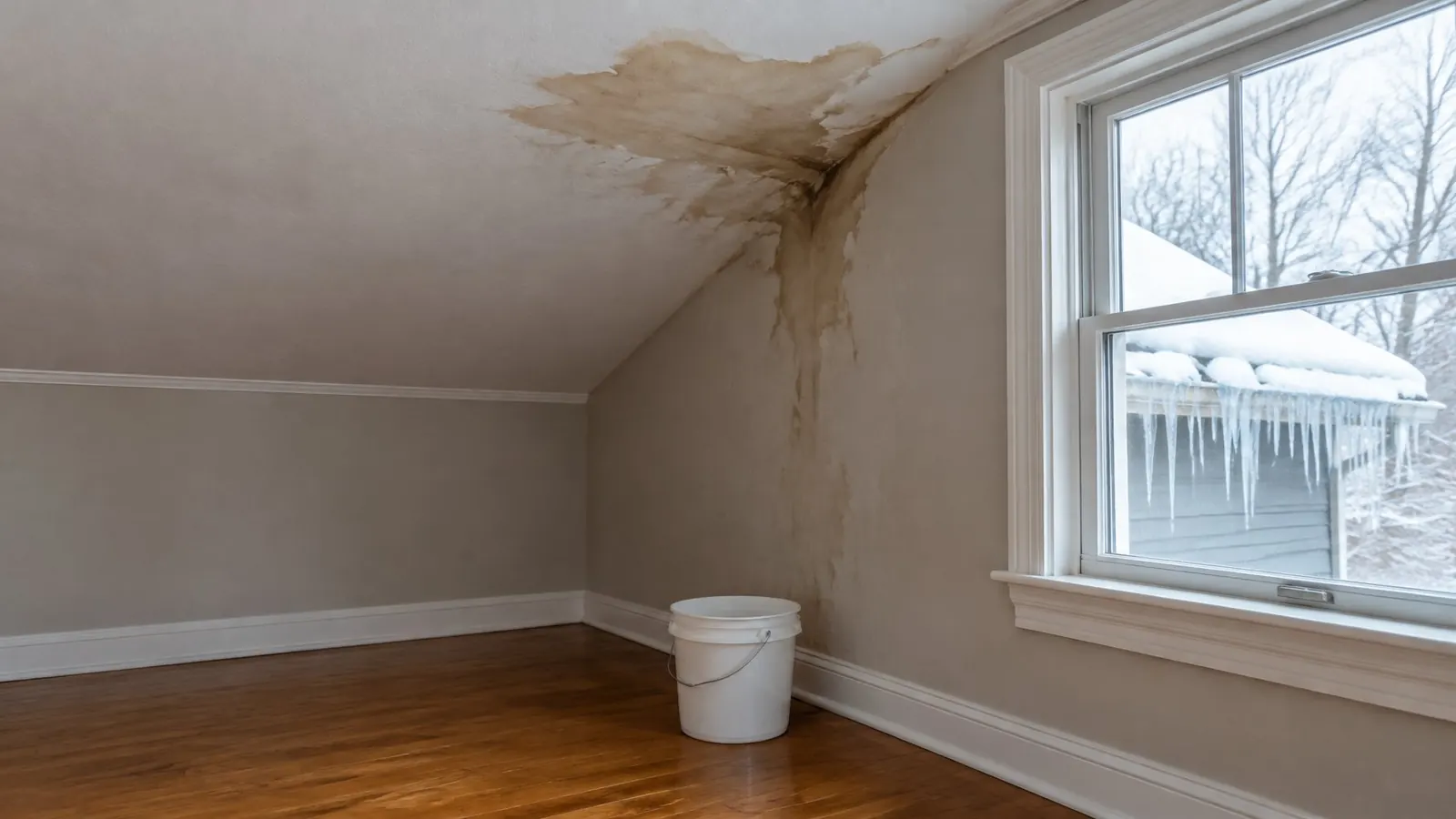
How an ice dam gets water indoors
The Minnesota Department of Commerce explains that ice dams start with warm, moist air leaking into the attic. Heat melts the underside of the roof snow, the meltwater runs down to the cold eaves and freezes there, and more water piles up behind the ice. That water can back up under the shingles and leak into the ceilings and walls below. (Commerce ice dam guide)
The damage often shows up as a stain near an outside wall, peeling paint, or water running down the inside of a window frame. Commerce adds that soaked insulation loses most of its value and that trapped water can crack plaster and lead to rot.
Step by step
When water comes through the ceiling
Catch it
Buckets, towels and plastic sheeting. Move furniture and electronics out from under the stain.
Check for sagging
A bulging ceiling holds water. Keep people out from under it and let a professional decide how to drain it.
Leave the ice alone
Commerce warns that chipping, chemicals or heat on the ice can damage shingles and gutters.
Photograph inside and out
Ceiling, walls, the ice at the eaves or the storm damage outside.
Call two trades if needed
A roofer stops the water coming in. A restoration contractor dries what is already wet.
Questions
Ice Dam, Storm & Roof Leaks: common questions
Is the stain dry once it stops dripping?
Not necessarily. Insulation above the ceiling and the framing around it can stay wet for days. A moisture meter or a look into the attic answers it.
Do I need a new roof?
That is a question for a roofer. Ice dams are usually an attic air-leak and insulation problem, according to the Commerce guide, rather than a sign of a bad roof.
Is storm damage covered by insurance?
It depends on the policy and on how the water got in. The Minnesota Department of Commerce has consumer guides on homeowners insurance at mn.gov/commerce.
Related
Often comes with
- Water Damage RestorationLeak found, water stopped, now what? Extraction, drying and putting the rooms back together.
- Frozen & Burst PipesA pipe split in the cold. Water off, then cleanup, drying and opening walls where needed.
- Mold RemediationSpots on a basement wall or behind a cabinet: moisture found, growth removed, the area dried.
Basement, ceiling, smoke or mold
Talk it through with a local restoration contractor
A single call reaches an independent contractor who handles water, fire and mold jobs around Minneapolis. They will ask questions, may come out to look, and give you their own price. Hiring them is your choice.
Water where it shouldn't be?
The call goes to an independent restoration contractor that takes jobs in Minneapolis and the nearby suburbs. Have the source, the wet rooms and the start time in mind.
Call (612) 471-0822Calls may be recorded. How the line is paid: referral disclosure. How call data is handled: privacy.