Basements
Flooded basement cleanup in Minneapolis
Most Minneapolis houses have one, and every spring and summer some of them take on water. Call to reach an independent contractor that pumps out and dries basements.
Find the source before the mop
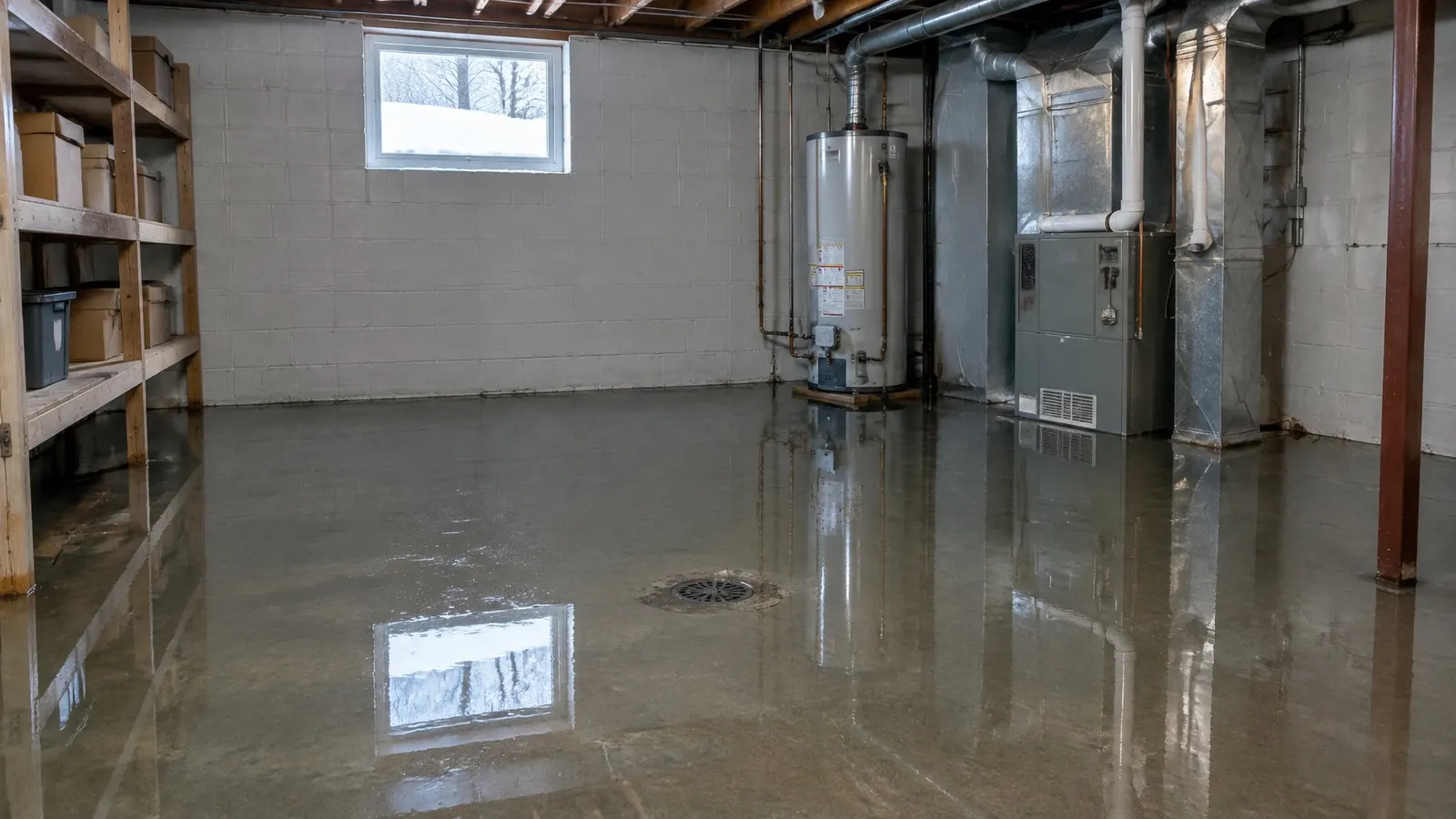
Basement water arrives by several routes: seepage through walls and the floor joint, window wells filling during a storm, a sump pump that quits, a floor drain pushing water up, or a pipe or appliance on the same level. Clear groundwater and a sewer backup are handled very differently, so the first question is which one you have.
Finished basements soak up a lot. Carpet, pad, the bottom of the drywall, insulation and stored boxes all hold water. Expect the contractor to suggest pulling wet pad and cutting the drywall back so the wall cavities can dry.
Step by step
Before help arrives
Stay out of deep water
Keep away if the water could reach outlets, cords, the furnace or the panel.
Check the sump
Running, stuck float, tripped breaker? A dead pump may need replacing before drying can work.
Watch the floor drain
Dark or smelly water rising from the drain points to the sewer, not the ground.
Lift what you can
Boxes, rugs and electronics off the floor, photographed first.
Note how high it got
A photo with a tape measure against the wall is useful later.
Questions
Flooded Basement Cleanup: common questions
Is it groundwater or sewage?
Clear water seeping at the wall joint or coming from a window well is usually groundwater or rain. Gray or brown water with an odor coming up the floor drain is treated as sewage. When in doubt, the contractor treats it as contaminated.
Do I need a waterproofing company too?
Possibly, if water keeps coming in through the walls or floor. Cleanup and drying deal with this event; drain tile, grading and wall sealing deal with the next one.
How soon should drying start?
Within a day or two. The Minnesota Department of Health notes that materials dried within 24 to 48 hours often do not grow mold.
Related
Often comes with
- Sewage Backup CleanupSewage up the floor drain or toilet: contaminated materials out, surfaces cleaned, rooms dried.
- Water Extraction & DryingStanding water pumped out, then air movers and dehumidifiers until the readings come back normal.
- Mold RemediationSpots on a basement wall or behind a cabinet: moisture found, growth removed, the area dried.
Basement, ceiling, smoke or mold
Talk it through with a local restoration contractor
A single call reaches an independent contractor who handles water, fire and mold jobs around Minneapolis. They will ask questions, may come out to look, and give you their own price. Hiring them is your choice.
Water where it shouldn't be?
The call goes to an independent restoration contractor that takes jobs in Minneapolis and the nearby suburbs. Have the source, the wet rooms and the start time in mind.
Call (612) 471-0822Calls may be recorded. How the line is paid: referral disclosure. How call data is handled: privacy.